Saint Lucian medical students in Cuba are experiencing what some now describe as a mounting crisis, holding on to hope that their training will stay intact as the United States hardens its stance on the island’s medical programmes and tightens its long-running embargo. The stepped-up sanctions have deepened fuel shortages, stretching an already limited system and intensifying daily pressures.
One Saint Lucian in her final year of medical studies in Havana, speaking anonymously because of political sensitivities and the uncertainty geopolitics has cast over her future, told St Lucia Times she has watched the embargo’s tightened grip hit Cuba’s energy supply. The result, she said, is longer electricity cuts and a widening divide between “those who have and those who don’t.”
“For example, they now practise load sharing where, on any given day, the population experiences blackouts for up to 16 hours,” she said. “Some have reported that they only have electricity for a total of two hours daily.
“Right now, public transportation no longer operates, which makes it increasingly difficult for daily movement. Schools have decided to move to a virtual learning approach… Doctors and other essential workers have also been impacted because they, too, rely on an efficient transportation system that no longer exists.
“However, while all of this is happening, you must remember that those who are fortunate enough are able to go about living life as normal because while life continues to become unbearable, they are able to secure the necessary funds to live comfortably.”
As Cubans bear the brunt of the hardship, students say the worsening situation has also forced them to confront the uncertainty surrounding their own futures. A fifth-year medical student told St Lucia Times he finds himself in a state of heightened anxiety, “caught between the political currents of the island” and his academic future.
“The palpable desire for regime change among the vast majority of Cubans, born from frustration with their current situation, is something I witness and understand,” he said, adding that the reality of everyday life on the island is directly fuelling a core worry.
“The security of my scholarship and my ability to complete my degree… I am haunted by questions of whether we would be able to finish our studies here, or if our hard-earned credentials could be transferred elsewhere.”
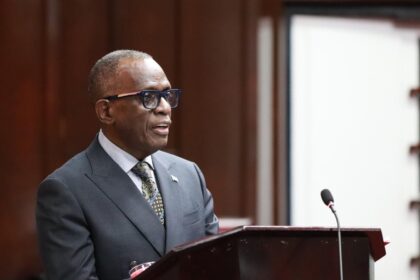
More than 50 Saint Lucians are currently studying in Cuba on government scholarships. At a Cabinet press briefing on Monday, February 9, Education Minister Kenson Casimir said contingency and evacuation plans are in place and were outlined to students during a virtual meeting on Thursday, February 6.
“If at the end of the day the students may need to go to a different school, the groundwork for that started months ago,” he said.
Casimir disclosed that discussions are ongoing with the University of the West Indies. Other regional institutions, including Ross University and St George’s University, have also been engaged, a reliable source told St Lucia Times. While hopeful that contingency plans will not need to be activated, Casimir said Prime Minister Philip J. Pierre has long committed to handling the matter proactively.
Sources confirm that a contingency plan, covering scenarios that may require the sudden evacuation of students and temporary accommodation in neighbouring countries, has been drafted and submitted before Parliament. It applies to students from all CARICOM states. Officials also reviewed how Jamaica managed the extraction of its students from Ukraine.
Students have raised concerns that, if programmes are terminated, they may be transferred elsewhere and required to cover the cost of their studies – an expense some say they cannot afford. Officials reassured them that, should such a situation arise, suitable solutions would be pursued. Full or partial scholarships and arrangements with the Saint Lucia Development Bank were among the options mentioned.
Another worry is whether qualifications earned in Cuba would be formally recognised. While officials expressed readiness for Saint Lucia to recognise medical degrees obtained there, they acknowledged that recognition in other jurisdictions could not be guaranteed.
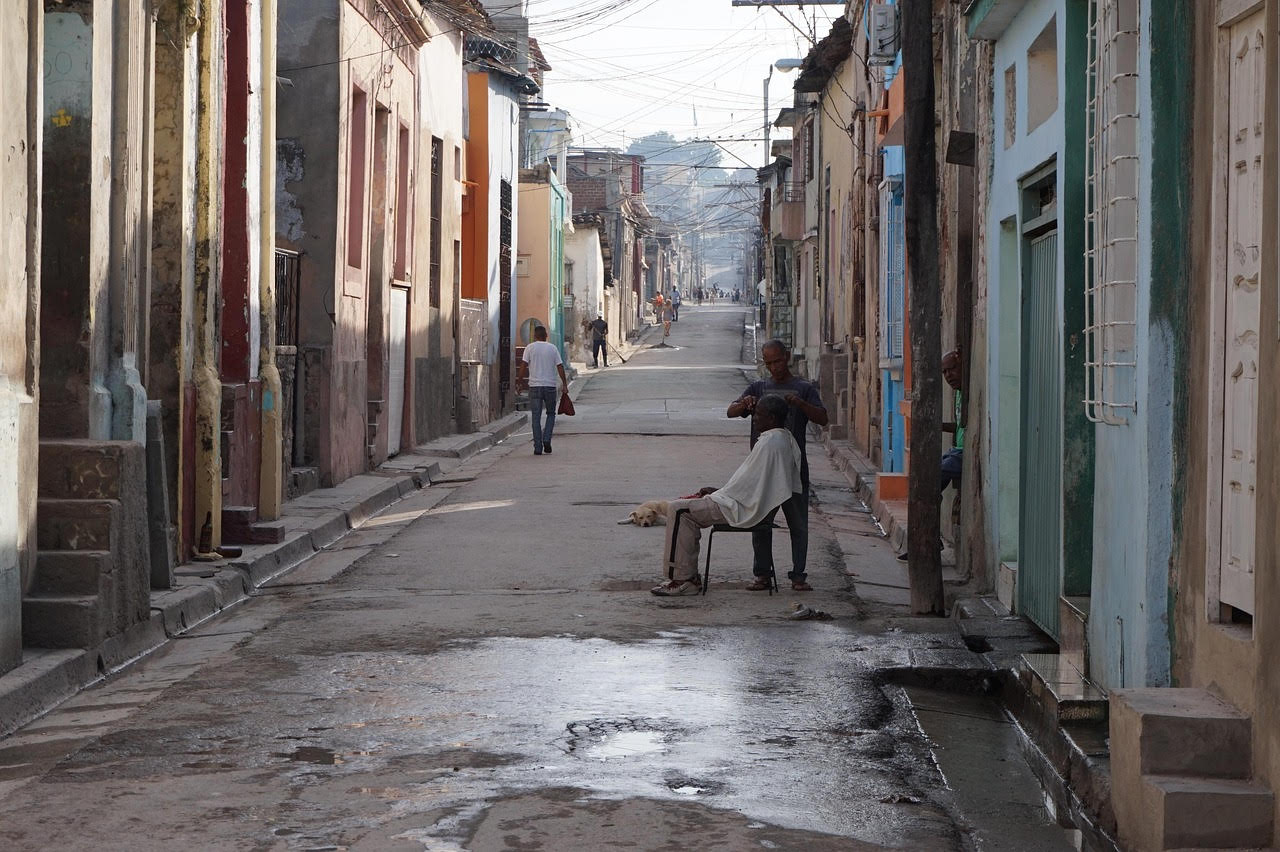
Addressing conditions in Cuba, Ambassador to Saint Lucia Yenielys Vilma Regueiferos Linares said that power outages have affected food production, water pumping, public transportation, hospital operations, schools and tourism. “Work is underway on the energy transition to move towards renewable energy sources and become more independent of fossil fuels, but it’s a process that takes time and resources under conditions of economic blockade,” she said.
According to Linares, Cuba has installed more than 40 photovoltaic parks. Five thousand photovoltaic systems are being placed in isolated homes and hard‑to‑reach areas, while another 5,000 modules are being installed in vital centres such as maternity homes, facilities caring for children dependent on constant electricity, nursing homes, polyclinics and other essential services.
She added that 10 000 photovoltaic systems are being delivered to workers in the education and health sectors. Plans for wind power generation are expected to advance this year, alongside efforts to increase production of domestic crude oil, or an “oil equivalent”, and associated gas.
“These efforts are still insufficient, but they represent an opportunity for sustainable development and greater energy sovereignty,” Linares told St Lucia Times.
On February 2, Prime Minister Pierre told a Cabinet press briefing that both the Saint Lucia–Cuba medical scholarship programme and Cuba’s medical brigade in Saint Lucia are at risk. However, he stressed that there was “no imminent withdrawal” of Saint Lucian medical students from Cuba.
Despite reassurances from government officials, concerns on the ground in Cuba remain high, students say.
“While nobody knows what tomorrow holds, this situation has undoubtedly created an atmosphere of panic among students here,” the final‑year student said of her colleagues from across the OECS. “While we do try to reassure each other, it becomes almost impossible to be at ease.”
Her own experience is grounded in a deeply rooted sense of purpose. Becoming a medical professional is not only a personal ambition but a source of pride for her family, as she would be the first doctor among them. She said she looks forward to acquiring skills she hopes will serve her wider community.
“As I am due to finish my programme soon, I try to really maintain my composure and believe that I will successfully complete my programme despite everything that is happening around me. Obviously, nothing is set in stone, and things can change instantly, for the worse or hopefully for the better.”
Meanwhile, another Saint Lucian, who is self-funding his specialised training to become a cardiologist, said his concern extends to the sustainability of Saint Lucia’s healthcare system should Cuba’s medical brigade become unable to operate.
“The Cuban scholarships have provided a constant replacement of migrating doctors, which brings up the concern of whether there will be a shortage of doctors in our public health system. Or would the government address the concerns of doctors leaving by providing better policies to reshape our health system? In the past, instead of addressing concerns, the government overlooked the situation since doctors were easily replaced by Cuban-trained doctors and the Cuban medical brigade.”
He said he hopes transparency from governments and diplomats is forthcoming regarding decisions being made, the reasons behind them, and the provisions that will be put in place for students as the impacts of US foreign policies take shape across the region.