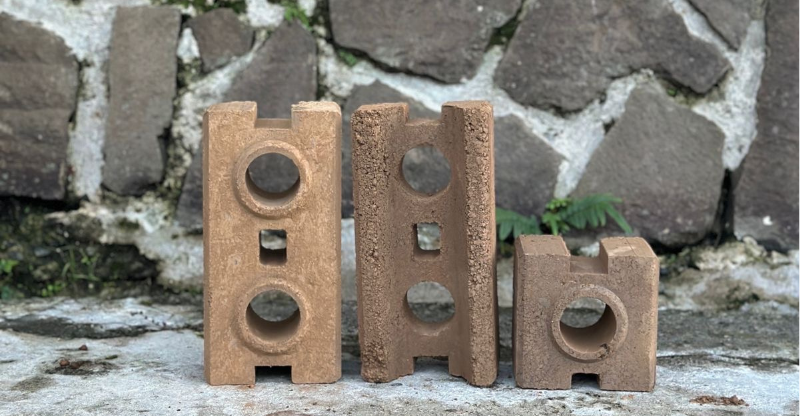
Home ownership felt like the next right step for Dyllan Boulogne after graduating from university, until he was confronted by the high cost of housing. But the realisation sparked something beyond frustration; it brought forth an idea that could help not just him but thousands, for generations. Reflective of the times, Boulogne’s story is one of ingenuity and, in more ways than one, deep-rooted Saint Lucianess.

Before graduating from the architecture and urban planning undergraduate programme at the Universidad Tecnológica de La Habana in 2023, Boulogne read extensively about ‘participatory design’ – a building approach in which residents construct and expand homes through a collaborative process. His studies also exposed him to structures, including condominiums, built using earth blocks in places like Brazil, India and parts of sub-Saharan Africa. Understanding how this approach enabled more affordable, sustainable buildings, Boulogne set out to formulate his own clay-based mixture, which he shaped into compressed stabilised earth blocks (CSEBs) to adapt to thrive in Saint Lucia’s climate.
“The country is abundantly supplied with clay soil, and clay is also one of the oldest building materials. So, we tried to see how we could use that type of technology at home,” he said in an interview. “It was done a long time ago in the form of a ceramic block but we didn’t have the capacity to heat up the blocks… So now, we’ve created our own mixture that we intend to use in residential and commercial projects, and is manufactured in Saint Lucia.”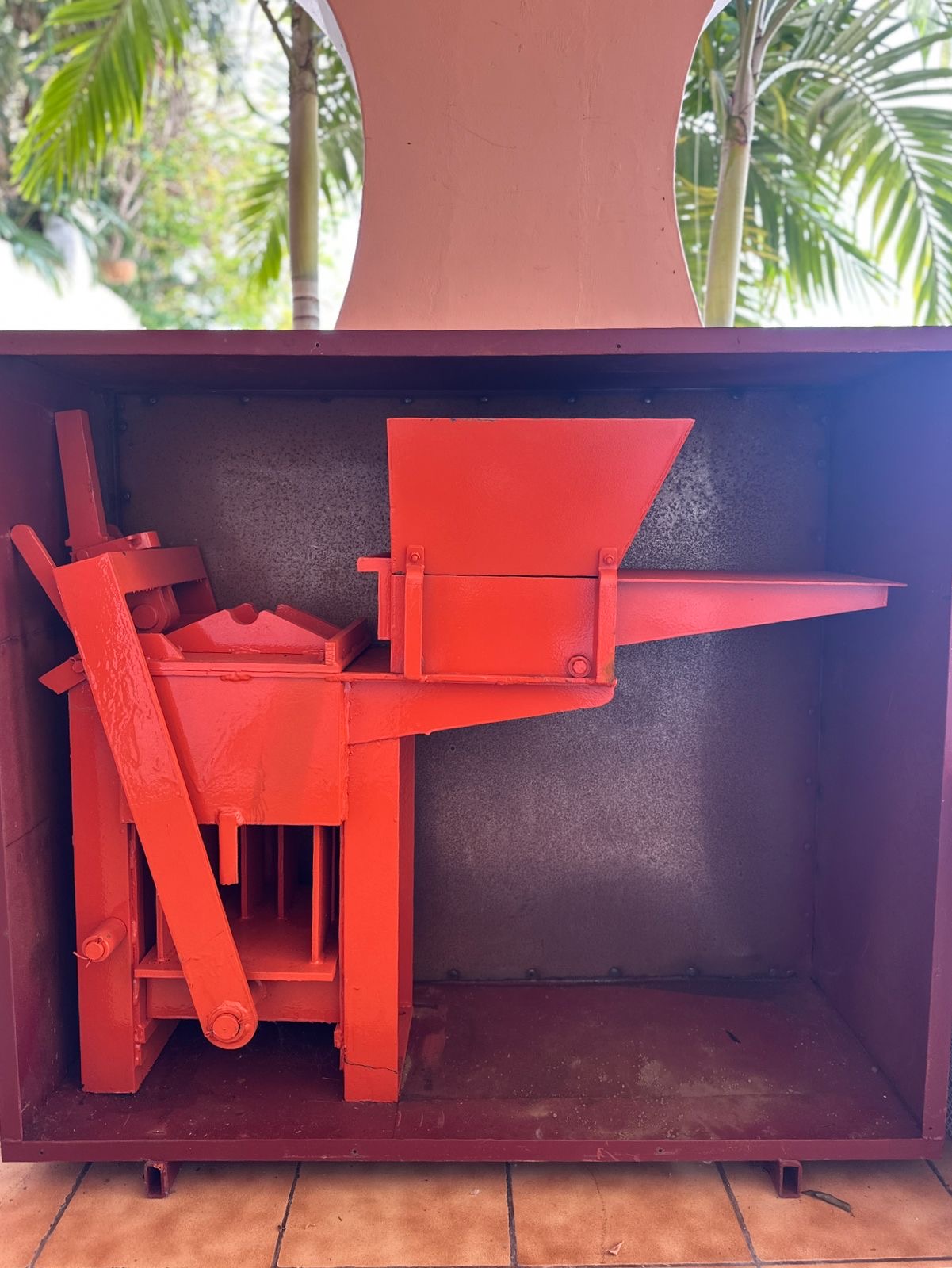
By day, he is an architectural professional and lecturer at the Sir Arthur Lewis Community College. Outside the classroom, after registering his business, Metaform Studio, Boulogne acquired his own hydraulic press, which he has since used to produce several blocks. “We’re trying to get a consistent supply of material, in order for us to produce blocks on a larger scale, allowing us to test them and get data on how well they perform,” he said.
His broader vision includes a future in which those blocks serve as a key part of the construction process for both standalone structures and condominiums in suitable spaces, offering low- to middle-income earners the opportunity to own homes.
“Accessibility of key components of the blocks – like clay and machinery – allow for homeowners to also expand on property over time,” he said, referencing the already common ‘build as you go’ practice often seen locally, just with slashed costs.
Fuelled by the potential benefits such an approach can have for the average person, Boulogne says he continues to push forward despite hurdles. Finding industry partners willing to collaborate has led to multiple dead ends, though financial institutions have been receptive to supporting more affordable designs.
Figures obtained in 2025 show that one square metre of a traditional home currently incurs a comprehensive cost of around $180, including blocks, steel, finishes, plastering, and labour. However, the use of CSEBs costs about $97 per square metre. “Also, we would not be using 100 percent imported materials; this further reduces costs,” Boulogne said.
He believes the innovation could result in savings of about 20 to 40 percent for standalone houses, with the range depending on personal preferences. “We’re trying to get to a point where people who can borrow below $350 000 can be offered homes, so we make sure these products don’t exceed that range,” he explained.
The design also offers additional benefits. The blocks are sustainable because they can be reused when structures are demolished, and the use of natural materials can allow for walls and roofs that improve indoor air quality. He says the skill requirements to work with the blocks are also lower, enabling more individuals to get involved in construction. Condominiums that can accommodate more people could further reduce costs, as land would be shared among multiple owners.
Boulogne says both short- and long-term goals remain central. Though block-making is a key component of his business, Metaform Studio does more. It is a research- and design-based company that also offers architectural and construction services, and it is looking to expand its offerings to include paints, plasters, polished finishes, roofing systems and modular elements.
However, beyond that, Boulogne says he hopes to contribute to an environment that incentivises others to innovate, build local capacity, and can successfully challenge archaic, restrictive housing policies: “Some regulations are a barrier in terms of catering to different density types of housing. They’re based in a time where people predominantly lived in these plantation-style houses. I look forward to a time when we can revisit and update our local housing policies.”