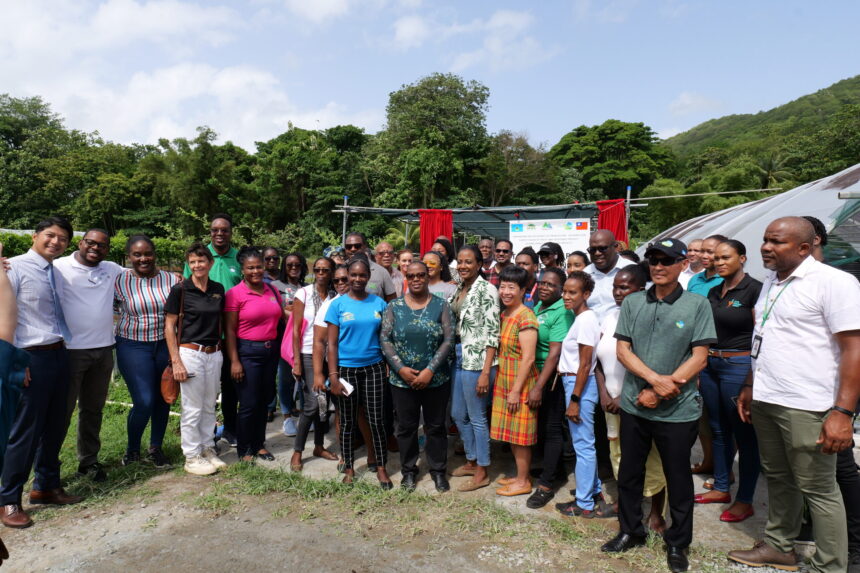
Dragon fruit is set to play a bigger role in Saint Lucia’s agriculture after the country’s first dragon fruit nursery opened in Union, Castries.
The Ministry of Agriculture opened the facility on Friday as part of the Seven Crops Project, working with the Taiwan Technical Mission. The nursery will provide more quality planting material as the government encourages more farmers to grow this high-value crop.
Aldine Eudovic, who coordinates the Seven Crops Project, said the nursery is part of a broader plan to diversify crops and strengthen agriculture against climate change.
“It is more than just a dragon fruit exercise. It is one of many of the different initiatives that we have done under the crops project for dragon fruits,” Eudovic said.
She said dragon fruit was chosen because it grows well in places where many traditional crops do not.
“Dragon fruit is of the cactus family and because of that, it can be grown on marginal lands,” she said. “It fits right into our portfolio of the ministry where we look into climate change… we’re looking at more non-traditional crops now, such as dragon fruit.”
Eudovic said the hospitality industry is very interested in dragon fruit, and demand exceeds what local farmers can supply.
“The hotel sector has been requesting in droves. The demand has been extremely high,” she said, adding that hotels are seeking locally grown dragon fruit to meet visitors’ demand for unique tropical produce.
Although Saint Lucia does not import dragon fruit, Eudovic said a few local farmers have been growing it for years. The ministry now wants to boost commercial production by distributing seedlings and offering technical support.
She added that the fruit’s longer shelf life makes it a good option for export.
Agriculture Minister Lisa Jawahir described the opening of the nursery as a step forward in government’s push to modernise farming.
“Dragon fruit is the perfect symbol of resilience. It thrives where many crops struggle, reminding us that with innovation and climate-smart agriculture, we can turn challenges into opportunities,” she said.
Jawahir said the nursery will provide farmers with quality dragon fruit and guava seedlings, allowing them to diversify production and invest in crops with growing market demand.
She also highlighted opportunities to strengthen the link between agriculture and tourism.
“There’s no reason why those experiences should not include premium dragon fruit and guava grown right here in Saint Lucia,” the minister said. “By connecting our agriculture with tourism, we create new income for our farmers while reducing our imports and strengthening our economy.”
She said expanding local production is part of government’s wider effort to reduce Saint Lucia’s multimillion-dollar annual food import bill while creating new income opportunities for farmers.
Farmers will be able to buy dragon fruit plants at a reduced price.